Carney All Seasons Blog: Archive for the ‘Heating’ Category

Propane, Oil or Natural Gas: Which One Should I Choose?

Friday, March 4th, 2011

In most cases, you’ll have a choice concerning what type of fuel you’d like your furnace to burn. For most people, this choice comes down to propane, oil or natural gas. The one you choose could significantly impact the cost of heating your home for many years to come, but it’s usually a pretty clear cut decision.

One thing to remember is that most furnaces that burn natural gas can also burn propane. If you don’t yet have a propane tank but are considering getting one, you might not have to make a final decision just yet. Although it’s generally better to set up your furnace for one type of fuel and then leave it that way, you will likely still have the option of converting later on if you should choose to.

If you do have access to natural gas, though, that’s probably going to be your best option. Furnaces that burn natural gas or propane are generally much more efficient than any other type of furnace on the market. You can get them with annual fuel utilization efficiency (AFUE) ratings as low as 80% and as high as 97+%, so that ensures that you’ll be able to find the one to fit your specific situation.

If you’re facing particularly harsh and frigid winters, you’ll want to choose the most energy efficient option available to you and that’s pretty much always going to be a natural gas furnace. Of course, when you’re looking to decide between natural gas and propane as a fuel source, you’ll just want to compare the relative cost for each in your area. For some people natural gas is cheaper, while it’s propane for others. And since your furnace will operate at the same efficiency no matter which of these fuels you choose, you just need to choose the cheapest.

Oil is certainly an option as well, but if you’re looking for a very high efficiency furnace, you’re not going to find one that burns oil. That doesn’t mean that an oil burning furnace might not be a good investment for you. If you don’t have access to natural gas in your area and your heating load isn’t that high, oil might be a perfectly economical choice for you.

If you do opt for a super high efficiency furnace, but don’t have access to natural gas lines, propane is probably the way to go as opposed to oil.

Continue Reading

What Is the Most Efficient Way to Heat My Home?

Wednesday, March 2nd, 2011

When it comes to home heating, efficiency is one of the main factors most people take into consideration. There are quite a few different options in terms of home heating, including oil, gas and electric furnaces, heat pumps, and boilers, and each of these have their own set of advantages and disadvantages depending on your own particular situation.

For better or worse, there is no one system that is universally more energy efficient and effective than the others. The one that will turn out to be the best choice for you is the one that fits best with your specific heating needs, the climate you live in and the relative price of the fuel sources available to you.

For instance, if you live in a relatively moderate climate, a heat pump may very well be a good option for you. These systems are able to operate much more efficiently than furnaces because they extract heat from the air rather than generating it themselves. That means that in the winter, a heat pump can take heat from the outdoor air and pump it indoors to heat your home. In the summer, the heat pump can actually do the opposite, taking the excess heat from indoors and transferring it out to provide you with a yearlong temperature control solution.

Heat pumps generally run on electricity which can be expensive, but since they use so much less energy than something like an electric furnace, they can still be a very energy efficient home heating option. However, these systems are not as effective in areas with harsh, long winters, and so would likely require a supplemental heating system as well. Also, the lower the outside temperature, the less efficient a heat pump is going to be.

Furnaces, on the other hand, are quite effective at heating homes no matter how harsh or cold the climate. Gas furnaces are generally the most popular of the models available now, mostly because the cost of natural gas is lower in most areas compared to the cost of other potential fuels.

However, it may be worth considering an oil or electric furnace if these types of energy sources are relatively inexpensive in your area. No matter what type of furnace you get, you’ll be able to choose how energy efficient you want it to be as well, with lower efficiency 80% AFUE furnaces costing substantially less than those with an AFUE of 90% or more.

Continue Reading

How Much Will a High Efficiency Furnace Save Me?

Monday, February 28th, 2011

The furnaces you can buy these days are all much more energy efficient than those available even 10 years ago. However, that doesn’t mean that all of the current models are created equal. There is still a pretty big variation when it comes to energy efficiency and when it comes to price, so you need to really know what you’re looking for if you want to get the best deal out there.

The first thing you should understand when you’re trying to pick out a furnace is how energy efficiency for this type of equipment it measured. All furnaces come with an annual fuel utilization efficiency (AFUE) rating that reflects just exactly how energy efficient they are.

Any furnace you buy today will have an AFUE of at least 80%, but it’s possible to purchase models with AFUEs of 97% or more. Of course, energy efficiency is generally a good thing, but there are some other things to consider when you’re trying to decide just how energy efficient you need your new furnace to be.

What this calculation really comes down to is how much you’ll be able to save monthly and annually with a higher efficiency furnace. While your heating bills will certainly be lower the higher the furnace’s efficiency is, you will also pay more up front for the highest efficiency models.

This higher purchase price may be worth it, however, if you live in an area with particularly harsh winters. If your heating load is very high and you’ll be using your furnace a lot, your monthly savings will make up for the higher initial price of the high efficiency furnace in a reasonable amount of time.

However, if you live in an area with relatively mild winters and you won’t be demanding a whole lot of your furnace, then the amount you’ll save each month with the highest efficiency models really won’t add up to much.

Keep in mind that a furnace with an 80% AFUE still may be more efficient than your current furnace and will potentially save you a considerable amount monthly when compared to the unit you’re currently using.  However, current utility rebates and government tax credits have made 95% AFUE furnaces almost as affordable as less efficient 80% AFUE furnaces.

At Carney Plumbing, Heating and Air Conditioning, we are proud to serve the entire Bucks and Montgomery Counties with furnace repair and maintenance services. Whether you live in Dublin, Worcester, Collegeville, or Doylestown, we’ve got you covered.

Continue Reading

Effects of Excessive Snow on Heat Pumps

Thursday, January 27th, 2011

Due to recent excessive snowfall, we wanted to pass along a few tips for our customers who own heat pump systems.

Heat Pumps and Snow

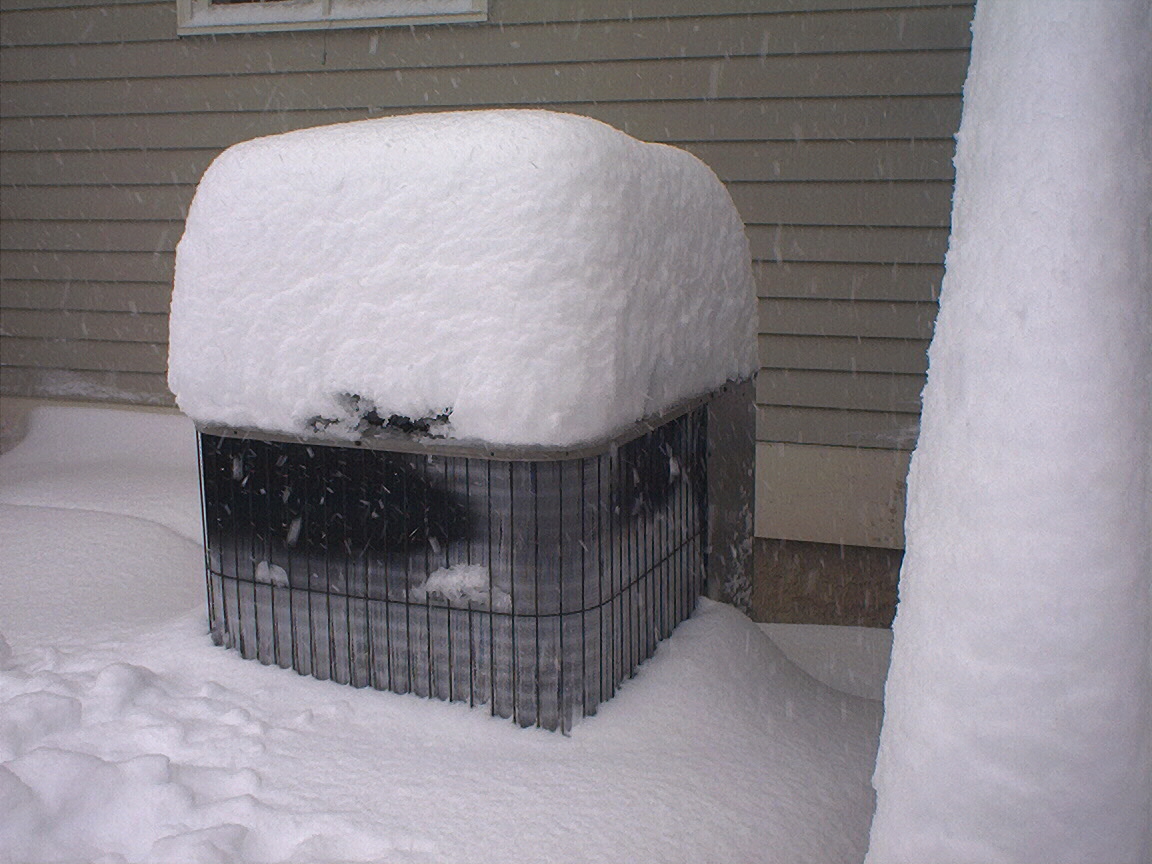
Excessive snow can reduce a heat pump’s ability to heat your home.

1. Heat pumps draw air from the areas surrounding them (all four sides of the outdoor unit). It is important to clear these areas of snow and ice build up in order to allow air to freely reach the heat pump. This will allow the heat pump to operate as efficiently as possible and will alleviate strain on the heat pump.

2. If possible, the space (air gap) between the heat pump and the plastic or concrete pad that the unit itself sits on should be cleared of snow to allow for drainage. Customers who have had heat pumps installed by Carney will note that there are two concrete lentels (rectangular blocks of concrete) that sit on either side of the base of the heat pump. The area between those lentils is the area that should be cleared.

3. Generally speaking, most heat pumps discharge air in an upward direction from the top of the unit. It is important to make sure that this area is clear of snow and ice to allow air to easily discharge (this is the air that is being drawn from the sides of the unit noted in item #1).

A note to Carney customers for whom we have installed a Trane XLi heat pump system: Trane’s XLi series heat pumps employ a “Weathergaurd” top that is designed to protect the heat pump from the affects of snow and ice on the top of the unit. In most cases snow and ice on the top of the unit will have no impact on an XLi heat pump. Air is discharged from the sides of the upper part of the heat pump instead. This area can be distinguished from the intake area as it is a) darker in color, b) plastic as opposed to steel, c) has a wider air gap between the fins and d) the direction of the louvers points upwards at an approximate 45 degree angle as opposed to downwards at the steel louvers. We have installed several hundred of Trane’s XLi series heat pump each year since 2003, so there is a good chance that you may own one – which is very beneficial at this time!

4. DO NOT attempt to forcefully remove ice build up from any part of the heat pump. If you cannot remove snow or ice easily with a broom or brush, do not try to pry or chisel ice from the unit. Doing so could cause severe or irrepairable damage to the heat pump.

5. If your heat pump is located in an area that is subject to exposure to melting snow and ice (such as underneath an overhang or gutter that may be frozen), check the unit repeatedly to ensure that ice has not built up inside the heat pump.

6. If you cannot clear the heat pump of snow and ice for any reason, switch the system to “Emergency Heat” at the thermostat. This will turn the heat pump off and engage electric resistance heaters that are located inside in order to provide heat for your home. This is a more expensive mode of operation for a heat pump system, so we do not advise continuing in this mode for more than a few days. If at that time, the snow and ice around the heat pump has not melted, feel free to schedule a service call with Carney and a technician from our service team will be happy to assist you.

Finally, if you are a geothermal heat pump owner – you have nothing to worry about! There is no outdoor unit, so there is no concern of snow or ice!

Further heating information can be found on our Heating FAQ’s Page.
As always, feel free to contact us with any questions or concerns at 215.346.7160 .

Continue Reading

Cleaning the Heating Coil: It Can Save You Repairs Later

Tuesday, January 11th, 2011

Just like any piece of equipment, your furnace needs some regular attention and maintenance to keep it running right. And one of the most important parts of the furnace to pay attention to during these service visits is the heating coil.

Without the heating coil, your furnace simply won’t be able to put out heat to keep your house warm. That’s because the combustion in the furnace is used to heat the coil. Air is then blown across the heating coil so that it can be warmed before being circulated throughout the house.

If your heating coil isn’t kept clean, it’s easy to see how you could end up with all types of problems down the line. And since air is constantly being blown across the coil when the furnace is at work, it’s particularly susceptible to accumulating buildups of debris and sediment.

When this happens, there are several consequences. First of all, your furnace will have a harder time heating your whole house and heating it evenly. As a result, all of the parts of the furnace will have to work overtime to keep your home warm and this can cause them to wear out and break faster. Of course, when that happens, you’ll need professional repairs to get you back on track and you may have to go without heat for some time in the coldest part of the year.

Also, a dirty heating coil won’t be as efficient at transferring heat to the air blowing past, meaning that you’ll be getting less heating power out of the fuel your furnace is consuming to heat your home. Essentially, this will mean your furnace is not functioning at peak energy efficiency and that will certainly be reflected on your monthly heating bills.

But all of this can be avoided by keeping your heating coil clean and in good repair. You will likely need to have a professional take care of this for you and it is a standard part of an annual maintenance visit. While you may have to pay a bit each year for that regular maintenance, you’ll be much better off and save a good deal of money in the long run by having it done and your coil cleaned.

Continue Reading

Heating system rebates up to $3,500 – now through December 31st!

Thursday, December 2nd, 2010

Have you taken advantage of the Federal Tax Credit yet?  What are you waiting for?  This is the FINAL MONTH to save thousands of dollars when you replace your old, less efficient home heating system with a new, energy saving, high efficiency heater!  If you replace your natural gas, propane gas or oil heating system with a qualifying system by December 31st the Federal Government is providing a tax credit up to $1,500!*

The year-end incentives don’t stop there!  In addition to the tax credit, manufacturer rebates of up to $1,000 on new heating systems and air conditioning systems are available now through December 31st.  Combine these two incentives and you’re saving up to $2,500 by simply having Carney Plumbing, Heating and Cooling replace your old, less efficient heater and air conditioner with a new, energy saving system.

In addition to the money you’re saving through the rebate offers, modern high efficiency heating and air conditioning systems save hundreds of dollars each year in energy usage and come with FULL 10 YEAR PARTS & LABOR WARRANTIES.
Call us today at 215.346.7160 to schedule your FREE, in-home consultation!  Don’t forget- these rebates are only available until December 31st.

The rebates don’t stop there!  We would like to offer you even more savings!  Carney Plumbing, Heating and Cooling now has a coupon allowing for an instant $400 off of your purchase of a new heater and air conditioner!  Click here for the coupon!

Finally, utility providers such as PECO and PP&L are offering rebates up to $700 for high efficiency furnaces, heat pumps and air conditioners.

Families across Pennsylvania are taking advantage of the Rebate Programs.

As you can see, the savings really add up if you act now, but this opportunity will not last!  Don’t wait until after December 31st to have your new heating system installed, because missing this deadline will cost you savings of up to $3,500!!!  Call Carney today to schedule your FREE in-home consultation and take advantage of these unprecedented incentives before the year is over and these offers expire!

*Consult your tax preparer for personal eligibility concerning tax credit.

Continue Reading

We’re Grateful for Central Heating and Indoor Plumbing

Thursday, November 25th, 2010

The holiday season is upon us again – a time for celebrating with family and friends, and remembering our many blessings.

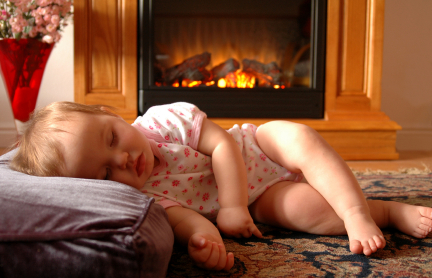
Of course, the most important of these are the love of our family and friends and the food that nourishes us. We hope these blessings are shared by all our customers.Baby Sleeping By Fire in a Comfortable Home With Central Heating

As the weather gets colder, we are grateful, too, for the comfort of our homes. It’s worth remembering that even the simplest of our modern homes are full of luxuries that people of centuries past could not even have imagined.

Take central heating, for example, which did not become widespread until the 20th century (although it was actually invented by the Romans). Here in the New World, early European settlers emulated the practices of the Native Americans, heating their homes with an open indoor fire and keeping out the cold with brightly-woven mats and furs. The houses stayed surprisingly warm during the winter (sometimes getting as hot as 90 degrees F, especially in the wigwams, which were better insulated than the colonists’ dwellings). But tending the fire was a tedious, time-consuming, dirty, and somewhat dangerous task – and as anyone who has ever made breakfast over a campfire will tell you, cooking three meals a day over an open flame was very challenging.

Indoor plumbing is another invention that early natives and settlers could not have imagined (although again, it had been invented long before by the ingenious Romans). During the long and arduous voyage to the New World, European colonists relieved themselves by sitting on shelves that jutted out over the sides of the ship; when they reached the New World, they simply went outdoors to do their business, even in the dead of winter. Even outhouses were luxuries in the early years. Baths were uncommon (sometimes a once-a-year event) and were not taken at all on board ship. When colonists did wash, they did so in a nearby stream or pond.

So, the next time you press a button on your thermostat to turn on the heat, or flush your toilet, or take a nice warm shower, or cook a meal on a temperature-controlled oven – give thanks!

We’re grateful for the opportunity to help you keep your home warm, safe, and comfortable. Our customers are one of the many blessings for which we are thankful – now and all year long.

Happy Thanksgiving to all.

Continue Reading

Easy Do’s and Don’ts for Winterizing Your Heating and Cooling System

Wednesday, October 13th, 2010

Like it or not, winter’s coming! And we guarantee you’ll enjoy winter a whole lot more (or at least hate it a whole lot less) if your heating system is working optimally.

Getting your heating system ready for winter will make the winter cozy and fun!

Getting your heating system ready for winter will make the winter cozy and fun!

Furnace maintenance is actually very easy – much easier than dealing with a major repair. These simple “to-dos” take about half an hour to complete, and are well worth your time. You’ll save money, avoid annoying and expensive breakdowns, and help keep your family safe and comfortable all winter long.

And, our list of “don’ts” will help you avoid mistakes that can cause equipment breakdowns and endanger your loved ones.

(As a bonus, these do’s and don’ts will help your air conditioning system survive the winter in great shape so that it’s ready to go when summer returns!)

  • DO…Call for your annual service ASAP, if you haven’t yet.
  • DO…Remove flammable items that may have been stored next to the furnace over the summer (weed whackers, lawn movers, gas cans, etc).
  • DO…Change/clean your air filter regularly, especially during heavy use seasons (winter and summer). You should replace disposable fiberglass filters, and wash electrostatic or electronic filters, at least every three months, and more often if they look dirty. A dirty filter will slow down air flow and make the system work harder to keep you warm or cool (a waste of energy). A clean filter will keep dirt and dust out of your system, increasing its longevity and reducing the need for expensive repairs.
  • DO…Check your thermostat programming to make sure it reflects your family’s current schedule. This will help you reduce energy costs.
  • DO…Check your chimney to make sure there are no cracks or loose bricks.
  • DO…Remove window AC units, and cover outside AC units to minimize damage from winter weather and debris (you can buy a cover at your local hardware store).
  • DO…Install a carbon monoxide detector next to your sleeping area.
  • DON’T…Try to service your heating system on your own. Leave it to qualified professionals!
  • DON’T…Wait for the first cold night to turn on your furnace for the first time. Test your heater for a few minutes while it’s still warm out (like in early September), to make sure that it’s working well on the first cold day. Also, if it’s warm, you can comfortably open the windows to disperse that “first time” smell.
  • DON’T…Try to turn on the heat while the thermostat is still set in AC mode. Just setting the dial above room temperature won’t activate the heat if the system is still in AC mode.
  • DON’T…Cover outside AC units with plastic. Plastic traps moisture and can lead to rust and deterioration. Instead, use a cover specifically designed for outdoor AC units.
  • DON’T…Assume that because you have a carbon monoxide detector, you don’t need to schedule a furnace inspection. A carbon monoxide detector should be a second line of defense, not a substitute for annual service.
  • DON’T…turn off the heat when it’s cold out, even if you are leaving your house for several days. Set the thermostat to at least 55 degrees so that your house stays warm enough to keep your pipes from freezing.

Continue Reading

Why You Should Get a Fall Tune-Up
…Even If You’d Rather Not Think About It

Friday, October 8th, 2010
A Carney furnace tune-up will give you peace of mind!

A Carney furnace tune-up will give you peace of mind!

Let’s be honest here. Unless you’re an HVAC contractor, you’re probably not particularly interested in your heating system. And that may lead you to skimp on routine maintenance.

But…if you really want to think about your heating system as little as possible, then routine maintenance is exactly what you need.


Limited time offer: Gas Furnace or Heat Pump Tune-Up – only $99!!


According to a study conducted by the Louisiana Cooperative Extension Service, 9 out of 10 HVAC system failures are caused by dirt and dust. That means that if you hire a professional to clean and service your furnace, and you change your furnace’s air filter once a month, you are 90% less likely to have a breakdown this year!

This, of course, is terrific news for your budget. Not only will you save by minimizing the possibility of a major repair, you’ll also increase your heater’s efficiency, which means lower energy bills this winter.

And that means more money for that new car, the kids’ college tuition, or (just maybe) your dream vacation.

But even better than that, routine maintenance leads to peace of mind. You’ll have less hassle, less worry, and a lot more time relaxing cozily in your house, doing whatever you want to do, while your heater minds its own business in your basement.

So, now that you’re persuaded…what routine maintenance do you need?

You should get an annual tune-up/inspection every year. A good furnace tune-up will include:

  • Checking the thermostat to ensure that the settings are comfortable and energy-efficient
  • Checking all electrical connections, motors, and controls
  • Testing the pilot light and the ignition
  • Lubricating the blower bearings and blower motor as recommended by the manufacturer
  • Cleaning dust from the blower compartment
  • Inspecting gas or oil connections, gas pressure, and burner combustion
  • Inspecting the heat exchanger to make sure it’s not leaking carbon monoxide
  • Checking the pilot light if the furnace has one
  • Testing air flow
  • Checking vents, drafts, and flues
  • Checking for gas leaks
  • Checking the safety components, such as limit controls and pilot safety; and
  • Inspecting the condensate drain (if the system includes central air)

Then, there are a few simple things you should do yourself.

  • Make sure nothing flammable has been stored next to the furnace over the summer (weed whackers, lawn movers, gas cans, etc).
  • Give the outside of your furnace a good dusting (also, dust the areas near it).
  • Test your heater for a few minutes while it’s still warm out (like in early September), to make sure that it’s working well on the first cold day. Also, you can comfortably open the windows to disperse that unpleasant “first time” smell.
  • Make sure that your thermostat is set in the heating mode when heating season starts. Just setting the dial above room temperature won’t activate the heat if the system is still in AC mode.
  • Change/clean your air filter regularly, especially during heavy use seasons (winter and summer). You should replace disposable fiberglass filters, and wash electrostatic or electronic filters, at least every three months, and more often if they look dirty. A dirty filter will slow down air flow and make the system work harder to keep you warm or cool (a waste of energy). A clean filter will keep dirt and dust out of your system, increasing its longevity and reducing the need for expensive repairs.
  • Install a carbon monoxide (CO) detector near your bedroom, and test it monthly. (Tip: do this whenever you change your air filter. And replace the batteries each year when you test your heater.) Please note that a CO detector should be a second line of defense, not a substitute for an annual furnace inspection.

Everything on the list above should take you about half an hour a year, in total. That’s a pretty minimal amount of time in exchange for months and months of worry-free operation!

PS. Everyone is suddenly interested in their heating system if it’s the first cold night and their furnace doesn’t work. This is not the time to schedule a tune-up. Do it now and beat the rush!

Call Carney at 215-346-7160 or contact us online to schedule an appointment.

Continue Reading

Pennsylvania Home Heating Rebates!

Friday, August 20th, 2010

Effective August 2, 2010 – the second phase of the Pennsylvania Home Heating Rebate Program has enhanced the monetary rebates provided by the Commonwealth to homeowners who replace their current, less efficient home heating systems and water heaters with new high efficiency, energy saving models!  The new ceiling for natural gas, propane gas and oil heating systems is now $1,000 (a $500 increase over the previous amount)!  Additionally, the Commonwealth has increased the rebate for Energy Star Qualified water heaters to $250 for tank style water heaters and $300 for tankless water heaters!

Families across Pennsylvania are taking advantage of the PA Home Heating Rebate Program.

Families across Pennsylvania are taking advantage of the PA Home Heating Rebate Program.

Details on qualifying models, updates on the programs and other information can be found at the Pennsylvania Home Heating Rebate Qualifying Products Page.

Carney Plumbing, Heating & Cooling continues to install dozens of tankless water heaters and home heating systems that qualify for these rebates and the Federal Tax Credit (up to $1,500) every week!  These two rebates alone save homeowners $2,500 towards the replacement of their older, less efficient heaters.

BUT ACT NOW! As of August 20th, the funding for this program was nearly 1/3 exhausted, additionally – the Federal Tax Credit is scheduled to expire on December 31st and there are no current plans to extend it.  Call Carney today at 215.346.7160.

Continue Reading